When the U.S. government starts leaning on communist China to save global shipping from a Middle Eastern crisis it partly helped create, you know the world’s “rules-based order” is running on fumes.
Story Snapshot
- Secretary of State Marco Rubio is publicly urging China to pressure Iran to stop threatening shipping in the Strait of Hormuz.
- Rubio accuses Iran of “blowing up ships,” laying mines, and holding the global economy hostage, while backing a naval blockade and new sanctions.[1][4]
- The United States frames this as a defense of global commerce, but hard, independently verified evidence from Iran’s side remains scarce in public records.[1][2]
- Both conservatives and liberals see a familiar pattern: foreign crises justify ever‑expanding U.S. commitments while global elites keep profiting.
Rubio’s Charge: Iran as the Villain of Global Shipping
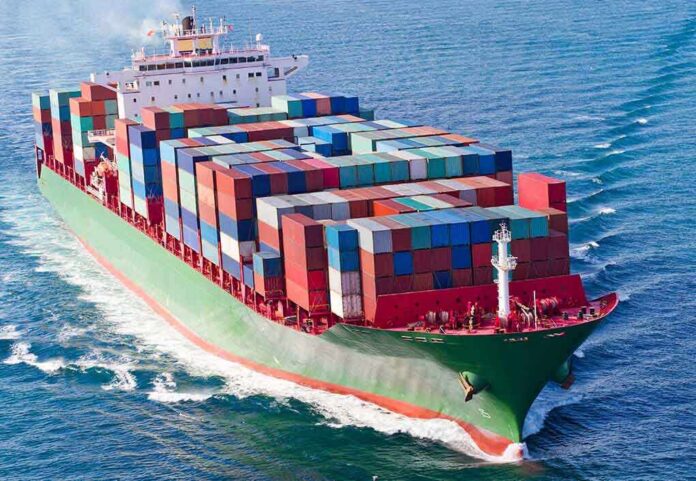
Secretary of State Marco Rubio is trying to fix the narrative: Iran, he says, is the “bad guy” in the Strait of Hormuz, attacking commercial vessels and threatening to choke off a key artery of the world economy.[1] He claims Iranian forces are blowing up ships, planting mines, and effectively holding global trade hostage by interfering with passage through the strait.[1] He argues such actions violate international law and endanger energy supplies that millions of ordinary people depend on worldwide.
Rubio’s remarks come as the Trump administration touts “Project Freedom,” a United States–led effort to secure shipping lanes, rescue stranded civilian mariners, and enforce a naval blockade aimed at crippling Iran’s revenue.[4] United States officials say Iranian threats and attacks have stranded thousands of crew members from dozens of countries and halted a large share of Iran’s trade.[4] Rubio insists the blockade is a defensive response, not an act of war, and that Iran “will lose” if it tries to shut the strait.[4]
Calling on Beijing: Why Washington Wants China to Squeeze Iran
Rubio is doing something that would have sounded unthinkable a generation ago: publicly asking Beijing to confront Tehran.[1] He says he hopes Chinese officials tell Iran’s visiting foreign minister that its behavior in the Strait of Hormuz is isolating it globally and damaging the world economy.[1] The logic is blunt power politics. China buys large amounts of oil and relies heavily on sea lanes that run through the Persian Gulf, so instability there hits Beijing’s energy security and growth.
United States officials argue that gives China real leverage, especially when combined with United States sanctions hitting Chinese and other foreign firms that help Iran evade restrictions.[3] Rubio has warned that Washington is “serious” about targeting companies that assist Iran’s energy exports or military operations, including those with ties to China.[3] In effect, the United States is telling Beijing: either pressure Tehran to back off, or absorb more economic pain as Washington tightens the screws. For many Americans, this shows how tightly our fate is now tied to the decisions of rival powers.
Evidence Gaps, United Nations Maneuvers, and the Deep State Pattern
The public record backing Rubio’s most dramatic charges is uneven. News reports and official statements repeat allegations of Iranian mining, ship attacks, and a quasi‑toll regime in the strait, but the available set here lacks detailed Iranian denials, maritime forensics, or independent trade and insurance data that would quantify the true scale of disruption.[1][2] That absence does not prove the allegations wrong, but it means citizens are asked, once again, to trust a security narrative built mostly on one side’s claims.
Rubio has pushed a draft United Nations Security Council resolution condemning Iran’s maritime actions and testing whether the institution can “prove its worth” by backing United States claims.[4] Earlier efforts faced vetoes from Russia and China, mirroring broader great‑power rivalries.[4] For Americans across the spectrum who already believe global bodies serve elite interests, the spectacle of Washington, Beijing, Moscow, and Tehran trading accusations over oil lanes confirms a deeper worry: powerful states weaponize international law when it suits them and ignore it when it does not, while ordinary people pay higher prices for fuel, goods, and, sometimes, war.
What This Fight Means for Ordinary Americans
Behind the diplomatic theater is a basic reality: the Strait of Hormuz carries a significant share of the world’s petroleum liquids, so any real disruption can spike energy prices, inflation, and economic stress for families already squeezed. Conservatives see a mess created by years of naïve engagement with Iran and overreliance on foreign oil. Liberals see another escalation that could drag the United States into a wider war while deepening the gap between global corporations and working households. Both sides see familiar players benefiting from chaos.
Marco Rubio says China should pressure Iran to reduce tensions because instability in the Persian Gulf threatens China’s energy and shipping interests.
— Mel Gibson (@MelGibsongh7) May 13, 2026
This episode also shows how quickly Washington reaches for military tools and great‑power bargaining instead of fixing structural vulnerabilities at home. If keeping our lights on and gas tanks full depends on what Iran does in one narrow waterway and how China responds to a United States request, that is not national strength; it is strategic dependence. Whether you blame woke climate policies, fossil‑fuel addiction, or corporate greed, the common thread is a government that rarely levels with people or changes course until crisis hits.
Sources:
[1] Web – Rubio hopes China tells Iran’s FM they are ‘the bad guy’ in Hormuz …
[2] YouTube – Marco Rubio Says Iran May Impose Toll on Strait of Hormuz Shipping
[3] YouTube – Iran-Linked Tankers Breach Blockade Marco Rubio Signals …
[4] Web – Rubio challenges UN to prove its worth with Iran maritime resolution