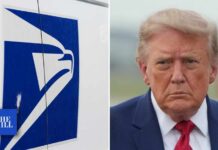
Immigration and Customs Enforcement refused to release Ilhan Omar records under a law used for active or contemplated enforcement, and President Trump amplified that signal into a national showdown.
Story Snapshot
- Immigration and Customs Enforcement cited a law-enforcement exemption to withhold Omar-related records.
- President Trump highlighted reports framing it as active enforcement activity.
- Ilhan Omar denied any investigation and said there is “nothing to investigate”.
- The law behind the records denial protects pending or prospective cases, but is temporary by design.
What Immigration And Customs Enforcement’s FOIA Denial Actually Means
Immigration and Customs Enforcement declined to release records tied to allegations about Representative Ilhan Omar, citing Freedom of Information Act Exemption 7(A). That clause lets agencies withhold records if release could interfere with enforcement proceedings. It exists to protect real investigations and possible future cases. It does not, by itself, prove guilt or guarantee charges. The Department of Justice’s own guidance stresses that the protection is temporary and tied to the life of the proceeding.
Exemption 7(A) has two parts. First, there must be an active, pending, or reasonably prospective enforcement action. Second, disclosure must be likely to cause harm to that action. Courts have upheld 7(A) in criminal and administrative settings when those conditions are met. But they have also signaled that agencies cannot use it forever. When the risk passes, the shield falls, and records should flow unless another exemption applies.
Trump’s Megaphone And The Political Stakes
President Trump amplified reporting on the Immigration and Customs Enforcement denial, which many supporters read as proof of an active probe into Omar’s immigration history. His signal turned a technical records decision into a front-page political fight. That move tracks with a long pattern in Washington: legal process moves at one speed, politics at another. Voters see the smoke and assume fire. Lawyers see a statute that protects process, not verdicts.
Conservative readers will care about two questions. First, are the rules being enforced the same for the powerful as for everyone else? Second, will agencies act with speed and clarity? Exemption 7(A) suggests something real enough to shield. That is reason to keep watch. But common sense says hold judgment until facts land in the open. Speed without proof helps no one. Proof without speed breeds distrust. The government owes both.
Omar’s Denials And The Public Record So Far
Representative Omar has rejected the fraud claims for years. She called them “disgusting lies” in 2018. She told reporters this spring that there is no federal probe into her and that there is “nothing to investigate.” Her office has said no evidence has been made public. Fact-check summaries over the years have also said there were no criminal charges brought on these claims in the records they reviewed. That remains the state of the public docket today.
One more point deserves clarity. A records denial under Exemption 7(A) is not a charging document. It is not a notice to appear. It is not a denaturalization complaint. It is a shield used during sensitive windows. The Department of Justice describes it as temporal, not permanent. If Immigration and Customs Enforcement or the Department of Justice files a case, the paper will say so. Until then, the legal record remains what it is: guarded and undeclared.
The Road Ahead: What Would Count As Real Movement
Three triggers would mark a true shift. First, a filed criminal charge or a civil denaturalization complaint in federal court. Second, a formal notice of intent from the Department of Homeland Security to open removal proceedings. Third, a clear, on-the-record agency statement naming an investigation and its scope. Anything short of that is signal, not siren. Exemption 7(A) is strong signal. A docket entry is the siren. Keep the difference straight, and you will not get spun.
🚨President Trump says “ICE ENFORCEMENT PROCEEDINGS” are being pursued against Rep. Ilhan Omar amid longstanding allegations of immigration fraud involving claims she married her brother — allegations Omar has denied.
Reports are also circulating that DOJ officials could be… pic.twitter.com/gBHQaKfyQt
— Annie🇺🇸 (@ag_0012) August 24, 2026
Congress can tighten the loop. Lawmakers pressing for immigration files can demand closed-session briefings that protect sources but confirm status and timelines. Agencies can update requesters when the 7(A) window closes. The courts can move 7(A) disputes faster to limit confusion. That is not partisan. That is good government. If an ordinary citizen faced the same cloud, he would want a fair answer fast. A member of Congress should get no less and no more.
Sources:
youtube.com, justthenews.com, thenationalpulse.com, newsbreak.com, alphanews.org, thehill.com, startribune.com
© truthandliberty.com 2026. All rights reserved.