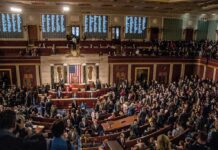
Speaker Mike Johnson shut down Thursday votes and sent the House home until after the midterms, forcing a fight over whether campaigning or new artificial intelligence rules should come first.
Story Snapshot
- Johnson ended votes early and set recess through the November elections.
- House Democrats urged him to cancel recess and pass artificial intelligence safeguards now.
- Leaders had already compressed the fall calendar to free members to campaign.
- Congress often recesses before elections, then returns for a lame-duck push.
Johnson’s Schedule Call Puts Campaign Season Over Last-Minute Lawmaking
Speaker Mike Johnson canceled Thursday votes and told members to head home a day early, starting the pre-election recess ahead of schedule. Reports said the chamber will not return until early November, after voters weigh in. That choice moves hot fights, from artificial intelligence to oversight, into the lame-duck window after the midterms. The practical effect is simple: members get more time in their districts, and floor risks shrink during campaign’s final stretch.
Republican leaders had already narrowed the fall work period. Outlets and watchdogs previewed a short September with a punch-list approach: move must-pass items, then break to campaign. This is not a one-off stunt. It matches a familiar election-year playbook, where the House trims session days before November, then reconvenes for a sprint to clear leftovers in a lame-duck session. Congressional research describes this recess-then-return pattern across decades.
Democrats Demand Congress Stay To Pass Artificial Intelligence Guardrails
House Democrats led by Representative Sam Liccardo pressed Johnson to cancel recess. Their letter warned of a “catastrophic risk” from advanced artificial intelligence and urged members to remain until Congress advances bipartisan safeguards. They cited concrete steps, naming proposals like a “kill switch” framework and transparency rules for high-risk models. Their official press release counted 107 Democratic signers as of the announcement and kept the letter open for more.
House Minority Leader Hakeem Jeffries called for immediate action and said the chamber should stay until Congress moves decisively to protect the public. Representative Greg Stanton echoed that view, saying lawmakers must address fast-moving model risks without delay. This push framed the recess not as a campaign need, but as a safety lapse. The message was blunt: high-stakes technology cannot run on Congress’s old calendar while systems race ahead.
What The Pattern Says About Power, Priorities, And Prudence
Congress often front-loads or punts in election years. Fewer session days, more district time, and a post-election cleanup are standard features, not bugs. That habit reflects a basic political truth: voters reward face time and local wins. The Capitol’s schedule bends to that logic and to narrow majorities that avoid risky votes before Election Day. The Congressional Research Service details how recess across the election window preserves time for a lame-duck push within the same congressional term.
CLARITY ACT FACES ANOTHER MAJOR ROADBLOCK
Speaker Mike Johnson says tomorrow’s House votes are canceled, with lawmakers expected to leave Washington tonight and remain on recess until after the November midterms.
That means even if the Senate revives the CLARITY Act following… pic.twitter.com/kwbFB0Owg6
— Bitcoin News (@BitcoinNewsCom) September 16, 2026
On the merits, the Democratic alarm on artificial intelligence deserves a hearing. The letter puts real risks on the table and points to concrete bills. Yet rushing rules in a panic can backfire. Laws written in a hurry often miss the mark, harm innovation, and face court trouble. A conservative, common-sense approach sets clear, narrow guardrails that target real hazards and defend speech, property rights, and competition. That work benefits from hearings, expert input, and text that can stand up in court.
The Likely Lame-Duck Path If Voters Send Them Back
Expect a checklist November. Leaders will try to package artificial intelligence oversight with measures that draw bipartisan buy-in and minimal industry shock. That means transparency on high-risk systems, independent testing, and fast penalties for proven harms. It likely stops short of a blanket “kill switch” without strict due process. The lame-duck pressure cooker can focus minds, but it also shrinks debate time. Precision matters most when the clock is short.
Sources:
thegatewaypundit.com, yahoo.com, uk.news.yahoo.com, nbcnews.com, newsweek.com, aiweekly.co, politico.com, time.com, govinfo.gov
© truthandliberty.com 2026. All rights reserved.