Israel’s dramatic bombing of Syria’s military headquarters in Damascus, just hours after warning the new regime to keep its hands off the Druze minority, sends a message to the world: red lines still matter, and someone is finally willing to enforce them.
At a Glance
- Israel bombed the Syrian Ministry of Defence in Damascus after repeated warnings to protect the Druze minority.
- This is the boldest direct hit on Syrian government infrastructure since Assad’s fall in late 2024.
- U.S. officials pressured Israel to de-escalate, fearing regional chaos and collapse of peace talks.
- Civilian casualties are reported, and the fragile ceasefire in Sweida has collapsed entirely.
Israeli Bombs Drop as Empty Warnings Meet Regional Mayhem
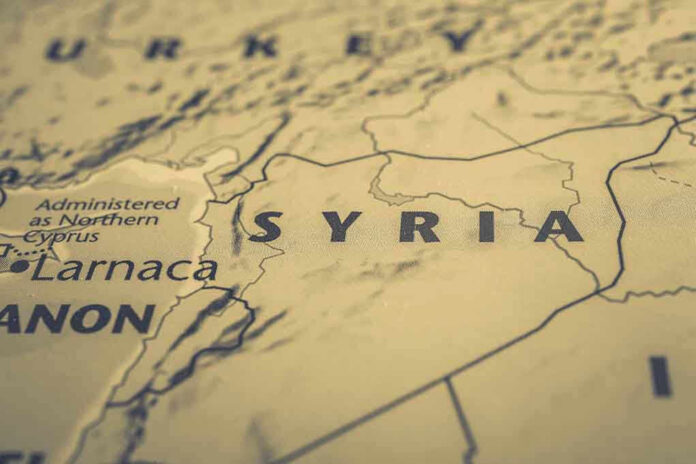
For years, Israel’s warnings to hostile neighbors have been dismissed as bluster by the international elite, but not this time. On July 16, 2025, Israeli airstrikes slammed into the entrance of Syria’s Ministry of Defence in Damascus and obliterated military convoys in Sweida. The move came after the new Syrian regime, led by Ahmed al-Sharaa, ignored Israel’s ultimatum to withdraw from Druze areas. The result? A collapsed ceasefire, dozens of casualties, and a region on the edge of wider war. This is what happens when American deterrence vanishes and the world’s worst actors sense weakness in Washington.
The Druze, a tiny religious minority in southern Syria, have long been caught in the crossfire of bigger powers. But with Assad’s regime collapsing and the new Syrian strongman seeking to stamp out dissent, the Druze found themselves under direct assault. Israeli Defense Minister Israel Katz made it perfectly clear: further attacks on the Druze would bring “immediate, direct military consequences.” Syria either didn’t believe him, or didn’t care. Now, Damascus is paying the price—and so is the myth of Western diplomatic “red lines.”
Ceasefire Shatters as U.S. Pressures Israel to Stand Down
While Israel defended its actions as necessary to prevent the slaughter of a vulnerable minority, the Biden-era foreign policy crowd—still haunting Foggy Bottom—rushed to urge “de-escalation.” U.S. Secretary of State Marco Rubio, representing an administration that seems to care more about process than results, called for immediate talks and warned that Israeli strikes risk “broader destabilization.” Meanwhile, the reality on the ground is chaos: the ceasefire between Druze militias and Syrian forces collapsed as soon as bombs fell, with both sides blaming each other for the renewed violence.
Syrian state media predictably reported civilian injuries—and, in a move that would make Orwell blush, accused Israel of “targeting innocent residents.” Yet, it’s the Syrian military that rolled into Sweida under the pretext of “restoring order,” only to be met with fierce local resistance and, now, Israeli airpower. The U.S. and international community can wring their hands all they want, but when tyrants test boundaries, only force gets their attention. The lesson of the last decade’s endless summits and “strongly worded statements” is that dictators don’t fear hashtags—they fear consequences.
Druze and Civilians Pay the Price for Failed International Posturing
The human cost is rising fast. Nearly 250 people have died in Sweida since the fighting erupted, and now, airstrikes threaten to push even more civilians from their homes. The Druze community—historically autonomous, fiercely independent, and often left to fend for themselves—faces new threats of reprisal from both the Syrian military and rival militias. Israel’s willingness to act, while controversial in some diplomatic salons, may be the only thing standing between the Druze and annihilation.
At the same time, border communities in Israel brace for possible retaliation from Iranian-backed proxies, while Syrian civilians in Damascus and Sweida wonder when the next round of bombs will fall. Regional instability is the predictable result of years of U.S. disengagement and a global order run by technocrats who never seem to suffer the consequences of their own policies. As for the new Syrian regime, its legitimacy is in shambles—propped up by tanks and fear, not by any real popular support.