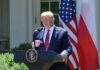
President Trump warns that Tuesday could obliterate Iran’s power plants and bridges if the regime refuses to reopen the Strait of Hormuz, escalating a crisis that threatens American energy security and global stability.
Story Snapshot
- Trump sets April 7 deadline for Iran to end Strait of Hormuz closure amid stalled ceasefire talks via Pakistan, Egypt, and Turkey.
- Iran’s IRGC defies demands, declares the strait will “never return to its former state” and sets up a toll system.
- U.S. and Israeli strikes intensify, with recent attacks killing top IRGC officials as negotiations falter.
- Oil prices soar, risking inflation that burdens working Americans on both sides of the political aisle.
- Trump urges allies to seize the strait, highlighting U.S. energy independence while exposing global dependence.
Trump’s Ultimatum Amid Stalled Talks
President Donald Trump issued a stark warning on Easter Sunday, demanding Iran reopen the Strait of Hormuz by April 6 or face devastation on Tuesday. Indirect ceasefire negotiations through Pakistan, Egypt, and Turkey aim to secure passage in exchange for de-escalation, but Tehran reports no progress. Trump stated he has given Iran opportunities to end hostilities, yet the regime persists amid U.S. Air Force operations and rescues. This deadline focuses potential strikes on IRGC targets, power plants, and bridges, echoing Trump’s past maximum pressure tactics but with unprecedented scope.
Iran’s Defiance and Military Setbacks
Iran’s Revolutionary Guard rejected Trump’s expletive-laden threat, posting that the Strait of Hormuz will never revert and unveiling a banner claiming the Persian Gulf as their “hunting ground.” Tehran formalized a toll system with Oman, charging vessels millions in rials while blocking U.S. and Israeli-linked ships. U.S. and Israeli forces launched strikes on Tehran early Monday, killing over 25, including a top IRGC intelligence official. Trump claims Iran seeks ceasefire because it is “getting obliterated,” signaling U.S. military superiority in ongoing operations.
Historical Tensions Fuel Current Crisis
U.S.-Iran hostilities originated in the 1979 Islamic Revolution, worsened by Trump’s 2018 nuclear deal withdrawal, sanctions, and the 2020 Soleimani strike. Recent escalation followed U.S. and Israeli attacks on February 28, prompting Iran’s strait closure and threats to shipping. Vessels now detour through Iranian waters under a de facto toll booth, disrupting normal navigation. This mirrors precedents like Trump’s 2019 “52 targets” warning but intensifies with explicit infrastructure threats amid active warfare.
Economic Fallout Hits American Families
The strait closure sends oil prices soaring, prolonging disruptions to global shipping of oil, gas, LNG, helium, and fertilizers. U.S. consumers face higher energy costs and inflation, exacerbating frustrations with federal responses to economic pressures. Trump highlights America’s oil abundance, urging import-dependent nations to buy from the U.S. or seize the strait themselves. Defense stocks rise, but broader energy sector chaos undermines Middle East stability and burdens households pursuing the American Dream.
Stakeholders and Global Ramifications
Trump leads as decision-maker, leveraging U.S. superiority to force IRGC capitulation and secure the strait. Iran clings to regional influence despite losses, while mediators seek stability to avoid spillover. Short-term risks include full strikes and prolonged closure; long-term threats involve nuclear escalation or regime change. Allies hesitate, prompting Trump’s call for “delayed courage.” Both conservatives valuing America First and liberals decrying inequality see government elites failing to shield citizens from elite-driven crises.