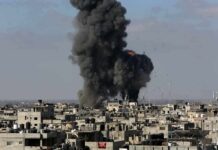
Iran fired on commercial shipping tankers in the Strait of Hormuz on Saturday, April 18, 2026, simultaneously announcing a full closure of the strategic waterway that carries 20% of the world’s oil supply, plunging global energy markets into crisis as Brent crude spiked to $108 per barrel.
Story Snapshot
- Iranian forces fired on tankers and closed the Strait of Hormuz in retaliation against a U.S. naval blockade, marking a dangerous escalation in the ongoing U.S.-Iran conflict
- The closure chokes a waterway that normally handles 20 million barrels of oil daily, now reduced to approximately 1 million barrels per day, mostly Iranian shipments to China
- U.S. Central Command deployed over 15 warships to enforce sanctions, intercepting vessels and rerouting 23 ships, while Iran controls transits through Larak Island as a “toll booth”
- Data reveals 71-88% of recent transits involve Iranian-linked vessels or shadow fleet tankers, contradicting claims of neutral shipping access
- Eighteen confirmed vessel attacks occurred this month amid a fragile ceasefire, threatening to derail negotiations and prolong regional instability
Iranian Retaliation Escalates Strait Standoff
Iran announced the closure of the Strait of Hormuz on Saturday following reported gunfire on commercial tankers, according to U.S. and UK maritime officials. Fars News quoted an Iranian military spokesperson declaring the 21-mile-wide chokepoint between Iran and Oman would be “strictly regulated” until the United States permits free navigation. The closure directly responds to a U.S. naval blockade enforcing sanctions on Iranian oil exports, with Iran accusing Washington of “banditry and maritime piracy.” This marks the first full closure announcement paired with direct use of force against vessels, distinguishing it from prior selective transit restrictions.
U.S. Blockade Chokes Critical Energy Artery
U.S. Central Command deployed more than 15 warships to the Strait earlier this month, intercepting vessels and compelling 23 ships to alter course as part of intensified sanctions enforcement. The blockade reduced oil flows through the waterway from a normal 20 million barrels per day to approximately 1 million barrels, predominantly Iranian tankers bound for China. Despite the U.S. naval presence, tracking data from Lloyd’s List Intelligence and Kpler shows 71-88% of recent transits involve Iranian-linked vessels or shadow fleet tankers operating under opaque ownership structures. Iran has established Larak Island as a de facto checkpoint, controlling which ships pass through the contested waters.
Shadow Fleet Dominates Reduced Traffic
Shipping industry analysts confirm that Iranian-operated or affiliated vessels have dominated Strait transits since the U.S.-Israel military operations against Iran began around March 1, 2026. On Friday, three tankers and four dry bulk carriers exited the Strait, all linked to Iranian interests and carrying approximately 2 million barrels of oil capacity. President Trump claimed Iran allowed 8-10 tankers through as a “present” signaling progress in negotiations, yet empirical data contradicts this assertion, showing no surge in Pakistani or neutral commercial shipping. The shadow fleet’s prevalence underscores Iran’s ability to evade enforcement despite overwhelming U.S. naval superiority, exploiting the waterway’s narrow geography for asymmetric leverage.
Global Energy Markets Face Supply Shock
The Strait’s closure threatens 20% of global oil supply, driving Brent crude prices to $108 per barrel as tankers idle and Asian buyers, particularly China, scramble for alternative sources. Eighteen confirmed vessel attacks occurred in April alone, creating a climate of fear that has deterred neutral commercial shipping from attempting passage. Industry experts note the conflict has effectively transformed the world’s most critical oil transit route into a militarized chokepoint where paper oil markets diverge sharply from physical delivery realities. Gulf shippers and global energy consumers face prolonged shortages if the U.S.-Iran standoff continues, with long-term implications for negotiations and regional stability hanging in the balance.
Iran fires on shipping tankers in Strait of Hormuz after threatening to shut it downhttps://t.co/SZ1XAhD1GU
— Human Events (@HumanEvents) April 18, 2026
The escalation exposes a troubling reality for Americans already burdened by years of energy policy mismanagement. Washington’s blockade strategy, while aimed at enforcing legitimate sanctions against a hostile regime, has inadvertently handed Tehran leverage over global energy supplies that ordinary citizens will pay for at the pump. Meanwhile, Iran’s willingness to fire on commercial vessels and weaponize a vital international waterway demonstrates the recklessness both powers bring to a conflict with no clear exit strategy. Ceasefire talks remain fragile, and the prospect of sustained closure raises questions about whether either side prioritizes the broader consequences for global commerce over narrow tactical gains in an escalating confrontation.
Sources:
Iran closes Strait of Hormuz once again, fires on tankers – Axios
Iran-linked ships dominate Strait of Hormuz traffic – The Jerusalem Post
Trump claims Iran’s tanker allowances signal progress – CBS News
Iran’s ‘Gift’ To the World: 10 Oil Tankers Through Strait of Hormuz – OilPrice.com