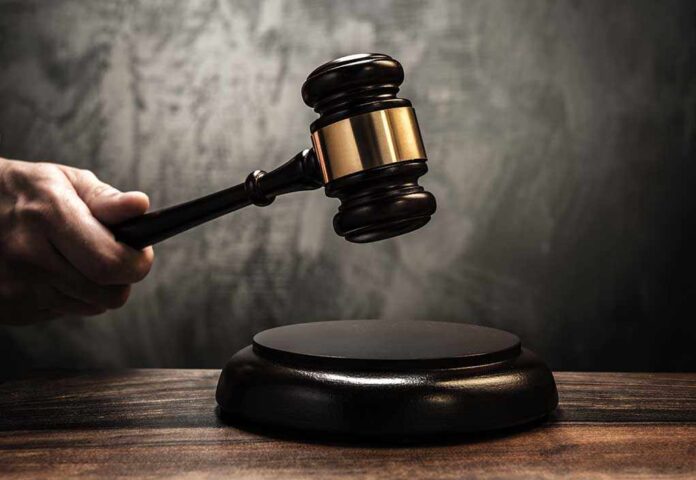
After a viral protest in Washington, D.C., a federal jury acquitted the “Sandwich Guy,” exposing the limits of criminalizing dissent and reigniting debate on the boundaries of protest under the Trump administration.
Story Snapshot
- A D.C. jury found Sean Dunn not guilty of assault after he threw a sandwich at a federal agent during a protest.
- The case became a symbol of resistance to federal law enforcement tactics and Trump-era protest prosecutions.
- Jury’s verdict cited lack of bodily harm and recognized the act as free speech, not criminal assault.
- Outcome highlights tension between local juries and aggressive federal prosecution strategies.
Jury Acquittal Signals Pushback against Federal Overreach in D.C. Protests
On November 6, 2025, a Washington, D.C. jury acquitted Sean Charles Dunn, a former Justice Department paralegal, of misdemeanor assault after he threw a footlong Subway sandwich at a U.S. Customs and Border Protection agent during an August protest. The jury took seven hours to deliberate, ultimately concluding that Dunn’s action, captured on viral video outside a club on U Street, was a harmless act of protest rather than a prosecutable crime. The trial’s outcome underscores the growing resistance among local communities against aggressive law enforcement tactics deployed under President Trump, especially as federal prosecutors sought to criminalize protest actions that jurors viewed as protected speech.
The incident occurred during a period of heightened tension in D.C., as federal agents were stationed across the city to respond to ongoing demonstrations and perceived threats to public safety. Dunn, motivated by his defense of immigrant rights, confronted the agents, calling them “fascists” and “racists” before throwing the sandwich. Prosecutors, led by U.S. Attorney Jeanine Pirro, pursued charges in an effort to deter assaults on officers, but local jurors repeatedly declined to indict protestors for similar acts, reflecting deep skepticism toward federal law enforcement presence and prosecutorial priorities. The case became emblematic of the friction between federal power and local autonomy in the Trump era, with activists framing it as a fight for First Amendment rights.
Legal and Social Implications for Protest and Free Speech
The acquittal of Dunn has immediate and longer-term implications for the prosecution of protest-related actions in D.C. In the short term, Dunn avoids jail but has lost his job at the Justice Department, demonstrating the personal costs of engaging in public dissent. For federal law enforcement, the outcome is another failed attempt to secure convictions against protestors who confront officers in minor or symbolic ways. Legal analysts and First Amendment advocates point to the jury’s verdict as evidence of reluctance to criminalize minor protest actions when bodily harm is absent, reinforcing the principle that protest—even if provocative—should not automatically be treated as assault.
Socially, the case has energized D.C.’s protest community and drawn national attention to the boundaries of free speech and assembly. The viral video and trial transcripts, widely shared and discussed, have amplified public scrutiny of federal tactics and prosecutorial strategies. Many see the verdict as a victory for First Amendment protections, while law enforcement officials warn against normalizing any physical acts against officers. The debate is likely to influence future prosecutions, with jurors now setting a precedent that intent and context matter when distinguishing protest from criminal conduct.
Stakeholder Reactions and Broader Political Consequences
Dunn expressed relief and gratitude following his acquittal, reiterating his commitment to defending immigrant rights and framing his actions as a necessary protest against federal overreach. District residents and activists have voiced support for the verdict, viewing it as a check on aggressive federal prosecution and a reaffirmation of local values. Conversely, U.S. Attorney Jeanine Pirro and law enforcement leaders have cautioned that assaults on officers, regardless of severity, undermine public safety and respect for authority. The case, one in a series of failed prosecutions under Trump’s law-and-order agenda, has embarrassed federal prosecutors and fueled ongoing debates about the proper limits of law enforcement and the protection of constitutional rights during public demonstrations.
Economically, Dunn’s job loss is a personal setback with limited broader impact, but politically, the acquittal has reignited scrutiny of Trump-era policies that prioritize federal intervention over local governance. Legal experts agree that the case will shape prosecutorial strategies moving forward, especially as the distinction between protest and criminality becomes increasingly contested. The incident and its aftermath serve as a microcosm of the tension between individual liberty and government authority—an issue central to conservative values and the ongoing discourse under President Trump’s leadership.
Sources:
Man found not guilty after throwing sandwich at federal agent in DC
DC ‘Sandwich Guy’ Acquitted: Jury Rejects Assault Charge Over CBP Confrontation
D.C. jury acquits ‘sandwich guy’ of assaulting federal agent
Indictment: Man accused of throwing sandwich at CBP agent in DC