Congressional investigators say ineligible foreign commercial drivers were tied to 17 fatal crashes and 30 American deaths last year, and Washington has moved to shut the door that let them on the road.
Story Snapshot
- House hearing spotlighted 17 fatal crashes and 30 deaths linked to ineligible foreign commercial drivers in 2025.
- Federal regulators tightened non-domiciled commercial license rules after finding state verification failures.
- Opponents argue no proof shows non-domiciled drivers crash more than citizens.
- Policy now limits eligibility to a few visa categories; work permits no longer suffice.
What Congress Put On The Record
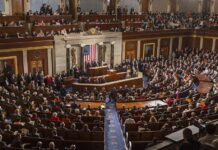
House Homeland Security members opened a 2026 hearing with a clear claim: illegal immigrants holding commercial licenses killed 30 Americans in at least 17 fatal crashes in 2025. The committee framed the issue as a safety and rule-of-law failure. Members pointed at states that issued licenses to people who were not eligible to hold them. The point was blunt. If the state cannot vet the driver’s legal status and background, the public pays the price when a fully loaded rig goes wrong.
Committee leaders also used specific cases to anchor the risk. They cited fatal wrecks that drew local outrage and national focus. The message landed with an older truth in trucking. A single high-force crash can kill families and close highways for hours. When the driver never should have had the credential, the moral calculus changes. Voters do not accept process excuses after a preventable death, and lawmakers know it.
What The Rule Now Demands
The Federal Motor Carrier Safety Administration (FMCSA) rewrote the non-domiciled commercial license rules. Only a narrow set of nonimmigrant workers now qualify, such as H-2A and H-2B seasonal workers and certain E-2 treaty investors. A work permit card alone no longer proves lawful presence for a commercial license. States must verify lawful status and identity to a higher standard before issuing or renewing. Regulators say this closes gaps that let unqualified applicants slip through.
The agency and court-facing summaries stress a process problem, not a statistical verdict on immigrants. FMCSA told the court the rule was not based on proof that non-domiciled drivers are less safe. It was based on the agency’s inability to run proper background checks and confirm foreign driving histories with the same rigor as for U.S.-based drivers. That inability, they argued, created an unacceptable safety risk window.
The Clash Over Safety Evidence
Public Citizen and union litigants counter that there is no empirical study showing non-domiciled drivers crash more often. They cite FMCSA’s own statements that the agency cannot estimate any safety difference by domicile status. They warn that sweeping cancellations harm drivers and employers without proven safety payoff. That argument resonates with courts that expect data, not fear, to justify large regulatory swings.
Supporters answer with first principles of conservative governance. A commercial license is a trust, not a right. If the state cannot verify who you are, your status, and your record, it should not hand you an 80,000-pound vehicle. You do not need a regression model to fix a broken lock on the front door. You fix the lock, then you measure outcomes. That is the common-sense sequence that protects families first.
The Hard Middle: Process Versus Proof
Two lanes define this fight. One lane is eligibility and compliance. On that lane, the record shows state licensing agencies fell short, and FMCSA moved to standardize and tighten checks across the map. The other lane is crash causation. On that lane, opponents point out the absence of exposure-adjusted crash rates that isolate domicile status from training, language, carrier pressure, or hours-of-service abuse. FMCSA itself has said it lacks enough evidence to quantify a domicile-based crash gap.
Policy now turns on which lane you believe should lead. If you value prevention and order, you start with tight eligibility, then gather data. If you value proof above all, you demand comparative crash rates first. Washington chose prevention. Congress aired grisly outcomes and demanded action. FMCSA removed work-permit shortcuts, narrowed who qualifies, and told states to clean up files. The courts will keep testing the rule, but the policy direction is set for now.
Sources:
landline.media, docs.house.gov, homeland.house.gov, govinfo.gov, overdriveonline.com, enotrans.org, ajc.com
© truthandliberty.com 2026. All rights reserved.