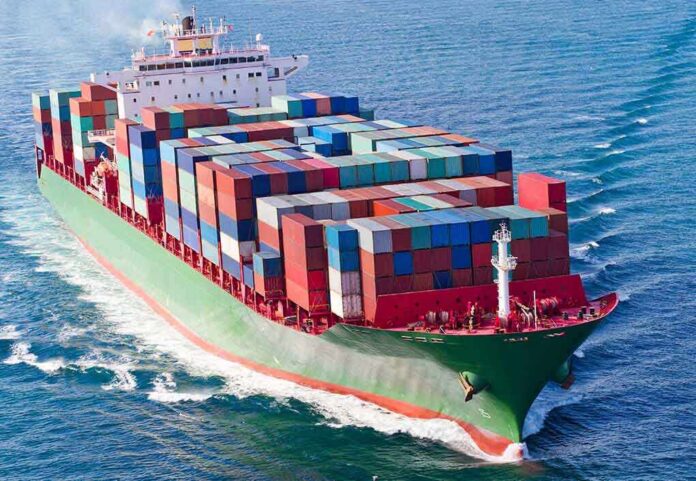
A single attack by small boats near Iran is a reminder that the world’s most important oil chokepoint can still be destabilized with cheap, fast, hard-to-track tactics.
Quick Take
- A northbound bulk carrier reported an attack by multiple small craft near the Strait of Hormuz, with crew reported safe and no environmental damage.
- The incident was confirmed by the United Kingdom Maritime Trade Operations (UKMTO), underscoring persistent risk for commercial shipping in the region.
- The attack follows another reported incident in the same area in late April, adding to a broader pattern of maritime violence tied to the Iran war.
- The episode unfolded as Iran floated a new peace proposal that President Trump publicly judged inadequate, keeping diplomacy and deterrence on a collision course.
What UKMTO Confirmed, and What Remains Unknown
British military maritime monitors at the United Kingdom Maritime Trade Operations center confirmed that an unidentified northbound bulk carrier reported being attacked by multiple small boats on Sunday, May 3, 2026, roughly 11 nautical miles west of Sirik, Iran. UKMTO reported that the crew was safe and that there was no environmental impact. Authorities did not disclose the vessel’s identity, and no group immediately claimed responsibility.
That uncertainty matters because it limits what can be responsibly concluded about who ordered the attack and what weapons, if any, were used. Public reporting has not provided details such as damage assessments, the duration of the incident, or whether onboard security teams responded. UKMTO advised vessels in the area to transit with caution and to report suspicious activity while the incident is investigated, a standard but serious signal for a high-risk waterway.
Why the Strait of Hormuz Keeps Becoming a Flashpoint
The Strait of Hormuz is one of the world’s most sensitive maritime chokepoints, and the current Iran war has kept commercial shipping stuck between military pressures. Iranian officials have asserted control over the strait, including claims that ships not affiliated with the United States or Israel can pass only by paying a toll. In practice, that kind of “permission structure” collides with freedom of navigation norms and makes routine trade feel like hostage bargaining.
Reporting also describes Iran relying on asymmetric tactics—especially fast-attack boats powered by twin outboard motors that are small, nimble, and difficult to detect. For commercial operators, that translates into higher costs and higher risk: more security measures, more insurance pressure, and more likelihood that a routine transit becomes a crisis. Even when crews survive and spills are avoided, repeated incidents can still disrupt schedules and raise prices downstream.
How This Fits Into the Trump Administration’s Deterrence Posture
The incident landed in the middle of a hardline U.S. posture. President Trump has ordered U.S. forces to “shoot and kill” small Iranian boats that deploy mines in the strait, and the United States continues enforcing an active naval blockade aimed at economic pressure on Tehran. Those policies reflect a familiar Republican argument: deterrence works only when threats are credible and enforced, especially against tactics designed to exploit hesitation.
Escalation Risks: Tit-for-Tat at Sea, Volatility at Home
The May 3 attack was reported as the first in that immediate area since April 22, when another cargo ship was reportedly fired upon. Multiple reports describe at least two dozen attacks in and around the strait since the Iran war began, reinforcing a pattern rather than an isolated event. That pattern increases the chance of miscalculation: a private vessel incident can rapidly become a state-to-state confrontation if attribution hardens or a crew is killed.
BREAKING: A large cargo ship reports being attacked by multiple small boats in the Strait of Hormuz just 11 miles from Iran's coast. pic.twitter.com/t28KVThfsk
— GBX (@GBX_Press) May 3, 2026
For Americans watching from home, the consequences often show up in energy markets and consumer prices. The strait’s strategic value means even limited disruption can rattle confidence, raise shipping and insurance costs, and feed inflationary pressures—an issue that has already defined political arguments over spending, energy policy, and economic competence. Available reporting confirms the danger and the trendline, but key operational details remain limited until investigations release more specifics.
Sources:
Cargo ship near Strait of Hormuz reportedly attacked
Iran, US, cargo ship attack in Strait of Hormuz, peace proposal
Cargo ship attacked by small craft near Strait of Hormuz, UK maritime agency says
Iran war live updates: Trump, Strait of Hormuz, Israel, Lebanon ceasefire
Thailand cargo ship Strait of Hormuz Iran